
 DE
DE







How to measure return on investment on your SEO efforts

Previously on this blog, we talked about the impact of A/B testing on SEO. Now, in this post, we talk about how to calculate ROI for your SEO efforts. This is a guest post by Prashant Puri, who is co-founder of AdLift.com – a niche SEO firm in the SF Bay Area. Previously he was Head of Global Search for Shopping.com (an eBay Inc. Company).
Download Free: A/B Testing Guide
Measurement is the first step that leads to control and eventually to improvement. If you can’t measure something, you can’t understand it. If you can’t understand it, you can’t control it. If you can’t control it, you can’t improve it.
Anonymous
The sentences above basically sum up the importance of measuring your SEO initiatives – only if you can measure SEO ROI can you improve it. Here’s how you get started with it:
Keyword Segmentation
You must exclude your own branded keywords from analysis before calculating ROI. This needs to be done because many users will search for your brand on search engines instead of typing in your URL directly. But those searches aren’t due to your SEO efforts, hence they need to be excluded. Use your analytics tool to segment keywords into 2 buckets:
- Branded
- Non-Branded
Here’s how you can do this (using Google Analytics as an example) –
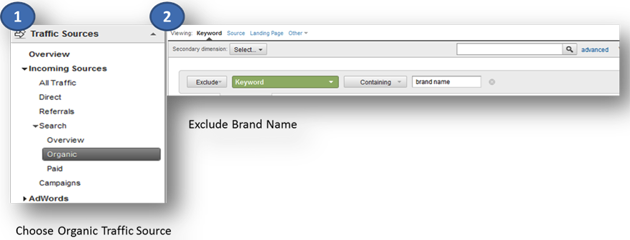
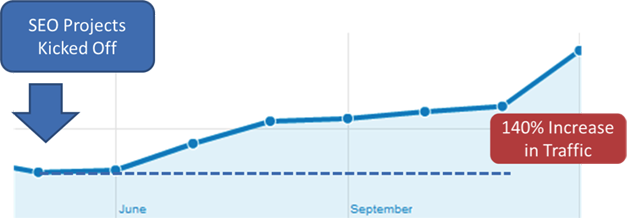
Once you exclude your brand terms – plot the traffic graph for your non-brand terms.
Calculating ROI
It’s easy to export this data and calculate the % increase in traffic or revenue (if you have eCommerce tracking in place – highly recommended). Once you have the revenue number you can calculate the ROI from your SEO efforts –

It’s relatively easy for eCommerce websites to calculate this once you have the tracking in place; however, the tricky part is for non-eCommerce websites to estimate ROI on SEO. This is where tracking conversions and setting goals becomes crucial – a conversion might be a sign-up, email opt-in, or just pageviews which drive up your advertising revenue.
Once you’ve identified your conversions and set this up the next step is to attribute a revenue number with each conversion. Let’s say you make $5 RPC (revenue per conversion) – so if you drive 50,000 incremental visits at an average conversion rate of 5% and a RPC of $5 – your revenue generated is 50,000 x 5% x $5 = $12,500. Now that you have the revenue number you can calculate your SEO ROI. Moreover, you can also focus on implementing some useful CRO strategies to boost your SEO efforts.
SEO helps in increasing the incremental visits as you continuously invest in content and link development strategies. Another lever that you can pull to maximize revenue is the conversion rate on your website. VWO is a great tool that can help you A/B test landing pages to improve the overall conversion rate.
Download Free: A/B Testing Guide
Other interesting analysis on your SEO efforts
Other SEO key performing metrics that help you analyze the performance of your SEO efforts are –
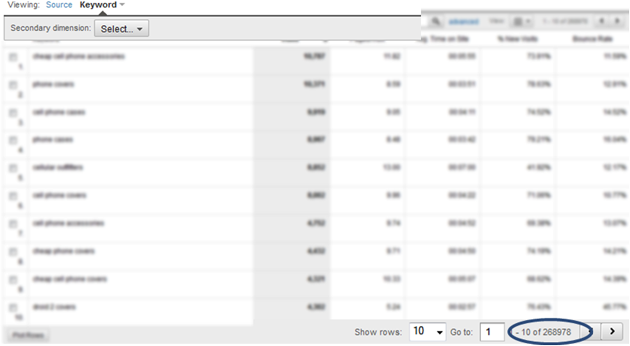
1) Number of Keywords driving traffic: This is a great metric to track your overall on-page optimization efforts. This tells you the number of keywords driving traffic to your site. In Google Analytics go to Traffic Sources -> Search Engines -> “non-paid” -> under source choose “keywords”.
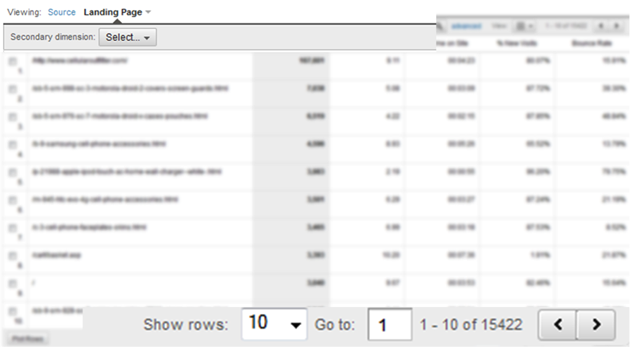
2) Number of Landing Pages: Another great metric to track, this tells you the number of unique landing pages that are driving traffic to your site. As your SEO traffic starts to grow you should start to see this number increase.
Search Engine Optimization has evolved into being a highly effective marketing channel – and it is exciting to be able to track this very closely!
Categories: